Before Kincaid and Hayward Field: Oregon Track and Field at Bangs' Park
“It is not often that the students of an institution as small as our own have the privilege [sic] of witnessing two big interstate field meets in one year. The contests which will be held in Eugene next month will be the best exhibitions of college sports ever seen in the state.”
— The Oregon Weekly, April 22, 1901
In the spring of 1901, the University of Oregon men's track and field team hosted two landmark competitions: dual meets against the University of California (May 6) and the University of Washington (May 18). These were the first interstate collegiate track meets for the University of Oregon and marked an important step in the university's growing athletic ambitions. The meets were not held at Hayward Field or even at Kincaid Field. Instead, they took place at Bangs' Park, approximately two miles northwest of downtown Eugene and about five miles from the university campus, near present-day Meriau Lane.
At the time, the university maintained a small track on the west side of campus near Villard Hall. It served primarily as a practice facility and hosted annual campus field days but lacked the grandstand and spectator amenities needed for major competitions.
The team began competing in 1895 and, during its first five seasons, participated only in the annual Oregon Intercollegiate Meet against other in-state schools. In 1900, the team traveled outside Oregon for the first time, winning against the University of Washington in Seattle. The following year, Oregon entered a new era by hosting universities from outside the state. These contests reflected the broader expansion of intercollegiate athletics at the beginning of the twentieth century and foreshadowed the emergence of regional athletic conferences.
Bangs' Park was originally developed in 1890 by Stephen Meriau. In 1899, local liveryman and stage-line operator Eli Bangs purchased the 135-acre property along River Road. The park featured a lake, a horse-racing track with a grandstand, a pavilion, and a mixture of wooded and open spaces. It quickly became one of Eugene's premier gathering places, hosting picnics, baseball games, bicycle races, dances, military encampments, and some of the earliest agricultural fairs.
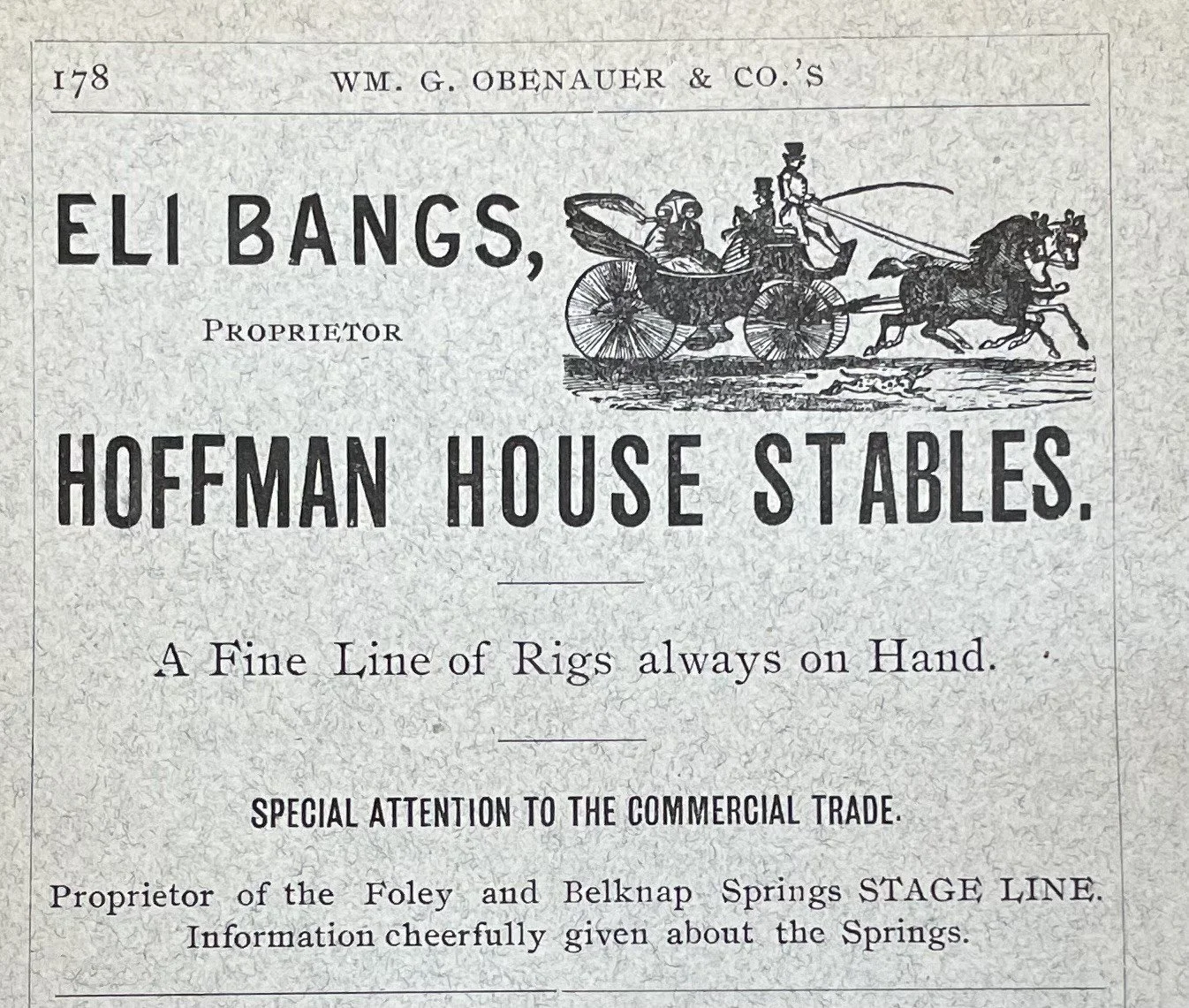
Bangs advertisement, 1893
The driving force behind bringing these track and field meets to Eugene was student manager Clifton McArthur. The financial success of the meets depended on strong public support. As The Oregon Weekly explained on April 1, 1901:
“As the cost of the event must be met by the Oregon team it is imperative that the students of the Varsity and the public spirited citizens of Eugene lend their best aid to the manager of the Oregon team to insure [sic] the success of the project so far as finances are concerned."
The community responded enthusiastically. Local businesses closed early, university classes were dismissed at midday, the Fourth Regiment Band performed, and an estimated 900 spectators attended Oregon's meet against California. Although Oregon lost, 75–42, the event demonstrated that Eugene could successfully host major collegiate athletic competitions.
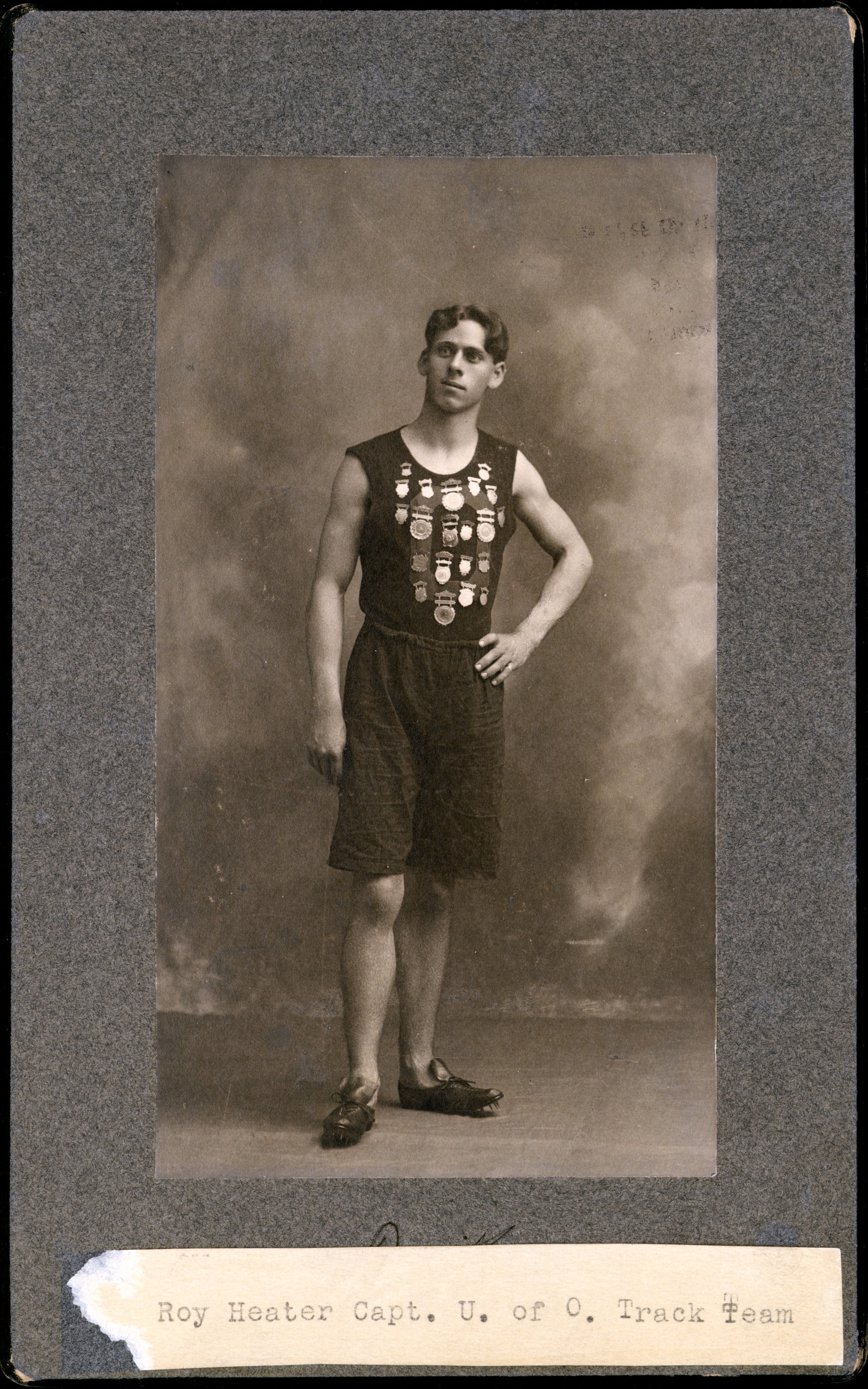
Less than two weeks later, the home crowd witnessed an even greater milestone. Oregon defeated the University of Washington, 66½ to 55½, earning its first interstate dual-meet victory in Eugene. The Oregon Weekly celebrated the performance as "a clean, convincing display of the superiority of Oregon muscle and grit..." Team captain Roy Heater led the team with standout performances in the 100-yard dash, 120-yard hurdles, 220-yard hurdles, broad jump, and pole vault, establishing himself as one of the program's earliest stars.
Bangs' Park hosted one final University of Oregon track meet in 1902, a dual meet against Pacific University. The following year, the university leased Kincaid Field and constructed a grandstand, giving the track team its first purpose-built home on campus.
In 1906, Eli Bangs sold the property to real estate developer H. Gordon, who in turn sold it to a lumber company that proposed building a sawmill. Those plans never materialized, and the land became an apple orchard before eventually being subdivided into the residential neighborhood that occupies the site today.
Although Bangs' Park has long since disappeared from Eugene's landscape, it occupies a significant place in Oregon athletic history. Before Kincaid Field and before Hayward Field, the university's first interstate competitions were staged on a horse-racing track at a local park—where hundreds of spectators gathered to witness the beginning of a new era in Oregon athletics.