
Between Performance and Ratification: Ed Moeller’s Unofficial World Record
Edward “Ed” Moeller briefly held the unofficial world record in the discus. On May 11, 1929, he threw 160 feet 7/10 inch (also recorded as 160 feet 8¼ inches) during a dual meet in Seattle between the University of Oregon and the University of Washington.
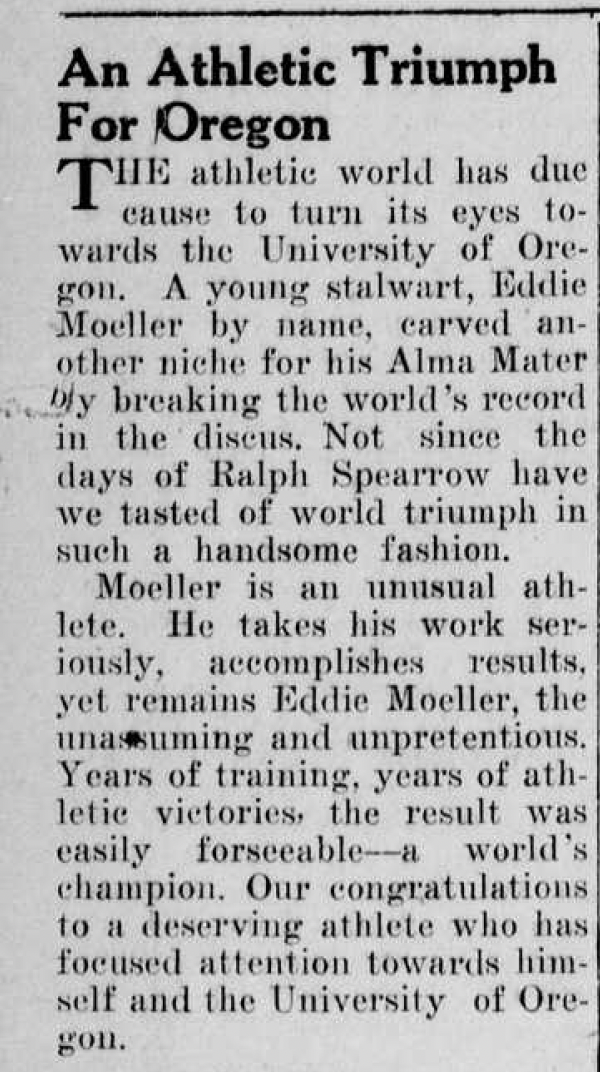
Oregon Daily Emerald, May 15, 1929
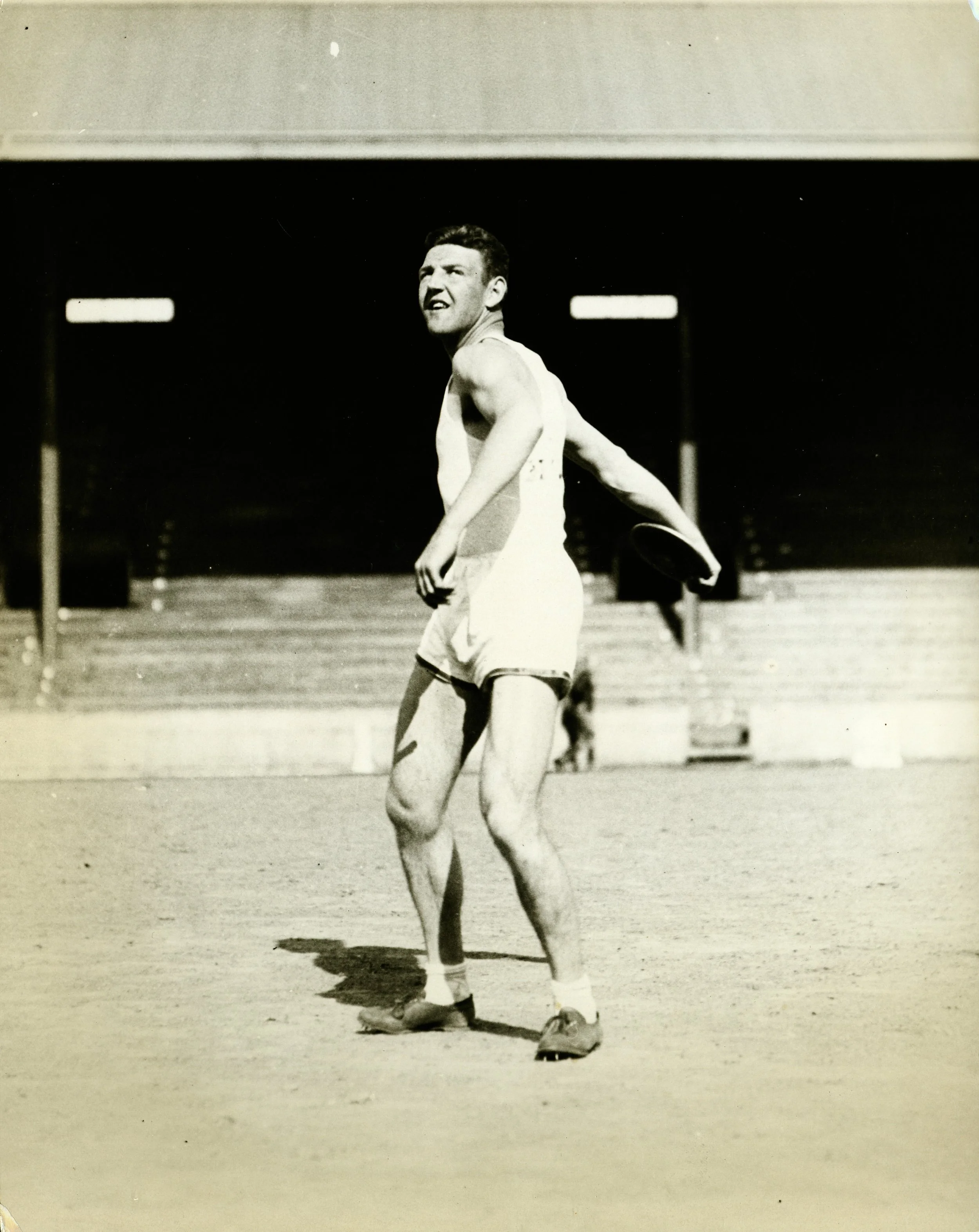
Moeller at Hayward Field, 1929
A California state record holder in the discus at San Diego High School, Moeller enrolled at the University of Oregon in 1927. There, he competed as a two-sport athlete in football and track and field, excelling in the discus. During the 1928 indoor intramural season, he also experimented with the shot put, high jump, and high hurdles, drawing comparisons to Oregon decathlete Vic Wetzel.
Moeller earned multiple accolades in the discus, including the 1929 conference title—setting a new divisional record—while defeating standout competitor Paul Jessup of the University of Washington. He went on to second place at the NCAA Championships behind Pete Rasmus of Ohio State.
His record-setting throw came during a remarkable year for discus throwing. In March 1929, Stanford’s Pete Krenz—the 1928 NCAA champion—set a new world record at 163 feet 8¾ inches. During the ratification period for Krenz’s mark, Moeller surpassed the existing official world record of 48.20 meters (158 feet 1½ inches), set in 1926 by two-time Olympian Bud Houser of USC. However, once Krenz’s record was officially ratified, Moeller’s mark was not recognized by the IAAF, leaving his achievement unofficial. Moeller’s west coast rivals, Krenz and Jessup, continued to push the limits of the sport by setting new world records in 1930.
Moeller was named captain of the track and field team at the end of the 1929 season. As The Oregonian noted on June 4, 1929, “The election of Moeller was unusual, since the captaincy is usually reserved for men in their senior year. Moeller was only a sophomore in the season just past, but his spectacular performances in the field events merited his receipt of the honor.”
He continued to excel in subsequent seasons, placing third at the 1930 national championships and again earning the conference title in 1931, along with another third-place finish at nationals.
Watch the 1930 NCAA Championships (Moeller competes in the discus, #386)
In 1932, Moeller stepped in to help coach the team when head coach Bill Hayward was hospitalized following a heart attack, all while continuing to compete and prepare for the Olympic Trials that summer. He won his semifinal heat at the trials but finished eighth in the final.
Moeller’s 1929 mark remained the University of Oregon school record for 31 years, until March 26, 1960, when Jerry Stubblefield threw 164 feet 8 inches.