
By Lauren Goss
One of the most valuable resources I use when researching the history of the University of Oregon track and field is the printed “Duck Dope” media guide. These guides document the people, performances, and traditions of Oregon athletics. For historians, coaches, athletes, alumni, and fans, these publications provide a window into the program’s past, preserving details that can be difficult to find elsewhere.
In sports journalism, “dope” referred to background information, statistics, records, and facts needed to cover a team or event. During the 1930s, growing demand for collegiate football coverage by newspaper reporters, radio broadcasters, and national wire services encouraged universities to standardize information through publications known as “dope sheets” and later as “dope books.” These eventually evolved into today’s media guides and fact books.
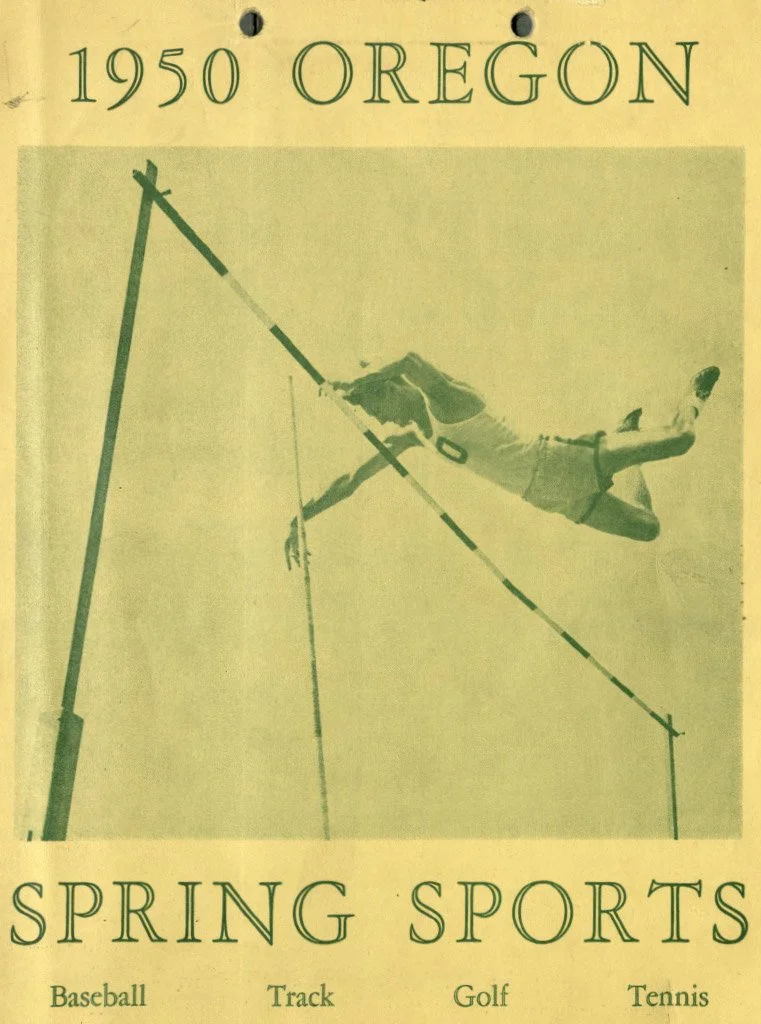
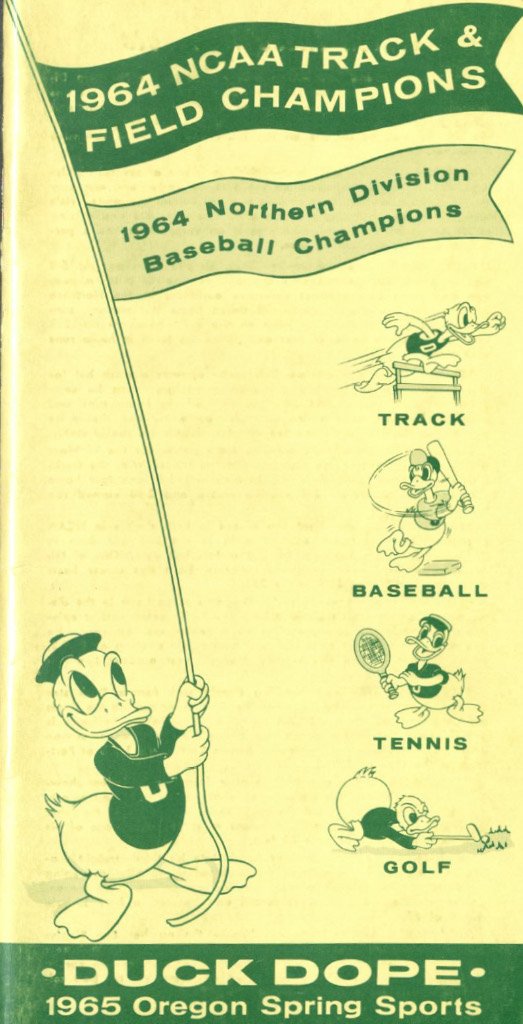
The Duck Dope tradition is associated with Bruce Hamby, a University of Oregon alumnus who wrote for the Daily Emerald and served as director of the university’s Athletic News Bureau from 1936 to 1943. He later became a sportswriter for The Oregonian. The University of Oregon published separate guides for football and men’s basketball, as well as publications covering winter and spring sports. They featured season previews, schedules, coaching biographies, team and individual records, and athlete profiles. For track and field researchers, these guides can help identify athletes, coaches, event specialties, and performances while placing individual seasons within the program’s broader history. Combined with meet results, newspaper accounts, and yearbooks, they provide valuable evidence for reconstructing the careers and accomplishments of generations of Ducks.
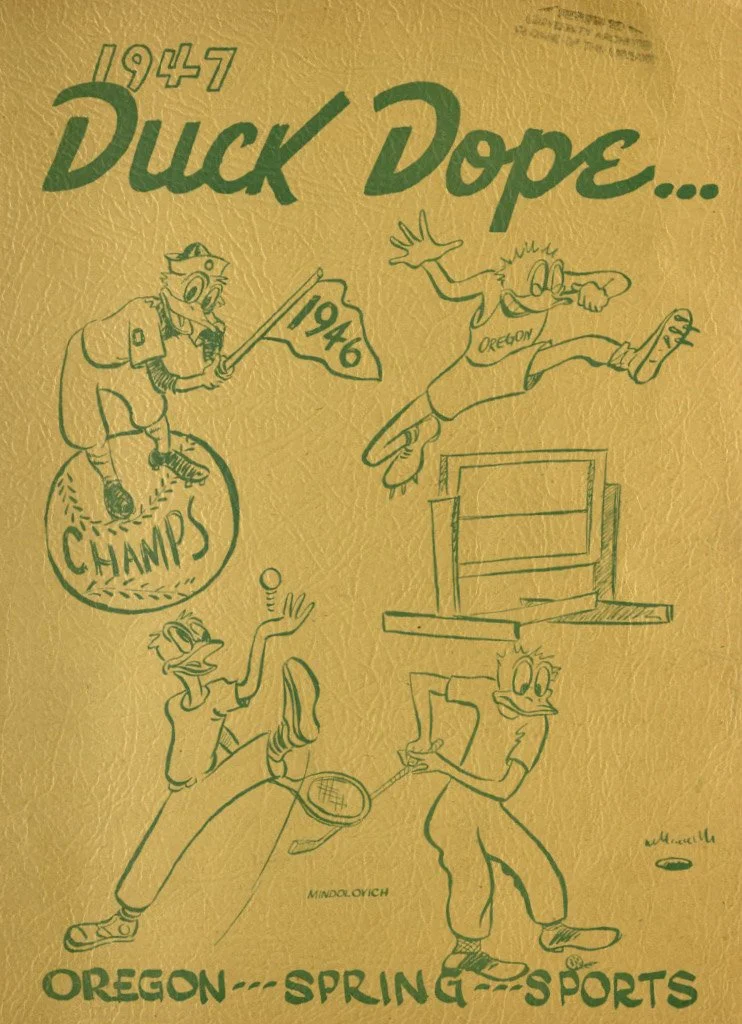
The first Duck Dope guide devoted to spring sports appeared in 1947, the final coaching season of legendary track and field coach Bill Hayward. Explaining his departure, the guide noted that “a new state retirement act makes it mandatory that he retire at the end of this season.” The statement documents a pivotal transition in Oregon track and field history. Collectively, the Duck Dope guides are an important historical resource, helping preserve the records, stories, and legacy of Oregon track and field for future generations.